---
title: KONNECT - JULY 2026
description: Discover the latest insights on the maritime industry challenges, global shipping trends, and economic impacts in Oceania - July 2026 update.
image: https://info.oceania.kln.com/hubfs/banner%20konnect%202026%202.png
---
[](https://oceania.kln.com)
- About us
- [Our Team](https://oceania.kln.com/about-us/team)
- [Oceania at a glance](https://oceania.kln.com/about-us/oceania-at-a-glance)
- [Sustainability](https://oceania.kln.com/about-us/sustainability)
- [Global network](https://oceania.kln.com/about-us/global-network)
- Content
- [KnowledgeHub](https://info.oceania.kln.com/knowledgehub)
- [Konnect](https://info.oceania.kln.com/konnect)
- [Customer Advisories](https://info.oceania.kln.com/customer-advisory)
- [Downloads & Resources](https://info.oceania.kln.com/downloads-resources1)
- Solutions
- [VBO - Supply Chain Command Center](https://info.oceania.kln.com/vbo)
- [KLN Online](https://info.oceania.kln.com/kln-online-solutions)
- Freight
- [Ocean Freight](https://info.oceania.kln.com/ocean-freight)
- [Air Freight](https://info.oceania.kln.com/air-freight)
- [Land Freight](https://oceania.kln.com/solutions/land-freight)
- [Multimodal](https://oceania.kln.com/solutions/multimodal)
- [Customs Brokerage](https://oceania.kln.com/solutions/customs-brokerage)
- [Cargo Insurance](https://info.oceania.kln.com/cargo-insurance)
- [Supply Chain Solutions](https://oceania.kln.com/solutions/supply-chain-solutions)
- [Consolidation](https://oceania.kln.com/solutions/consolidation)
- [Integrated Logistics](https://oceania.kln.com/solutions/integrated-logistics)
- Locations
- [Australia](https://oceania.kln.com/locations/australia)
- [Aotearoa New Zealand](https://oceania.kln.com/locations/aotearoa-new-zealand)
- [Global network](https://www.kln.com/en/network/)
- [Track & Trace](https://oceania.kln.com/track-trace)
- [Contact](https://info.oceania.kln.com/contact)
- [Subscribe](https://info.oceania.kln.com/subscribe-communications)
- About us
- [Our Team](https://oceania.kln.com/about-us/team)
- [Oceania at a glance](https://oceania.kln.com/about-us/oceania-at-a-glance)
- [Sustainability](https://oceania.kln.com/about-us/sustainability)
- [Global network](https://oceania.kln.com/about-us/global-network)
- Content
- [KnowledgeHub](https://info.oceania.kln.com/knowledgehub)
- [Konnect](https://info.oceania.kln.com/konnect)
- [Customer Advisories](https://info.oceania.kln.com/customer-advisory)
- [Downloads & Resources](https://info.oceania.kln.com/downloads-resources1)
- Solutions
- [VBO - Supply Chain Command Center](https://info.oceania.kln.com/vbo)
- [KLN Online](https://info.oceania.kln.com/kln-online-solutions)
- Freight
- [Ocean Freight](https://info.oceania.kln.com/ocean-freight)
- [Air Freight](https://info.oceania.kln.com/air-freight)
- [Land Freight](https://oceania.kln.com/solutions/land-freight)
- [Multimodal](https://oceania.kln.com/solutions/multimodal)
- [Customs Brokerage](https://oceania.kln.com/solutions/customs-brokerage)
- [Cargo Insurance](https://info.oceania.kln.com/cargo-insurance)
- [Supply Chain Solutions](https://oceania.kln.com/solutions/supply-chain-solutions)
- [Consolidation](https://oceania.kln.com/solutions/consolidation)
- [Integrated Logistics](https://oceania.kln.com/solutions/integrated-logistics)
- Locations
- [Australia](https://oceania.kln.com/locations/australia)
- [Aotearoa New Zealand](https://oceania.kln.com/locations/aotearoa-new-zealand)
- [Global network](https://www.kln.com/en/network/)
- [Track & Trace](https://oceania.kln.com/track-trace)
- [Contact](https://info.oceania.kln.com/contact)
- [Subscribe](https://info.oceania.kln.com/subscribe-communications)
- [Home](https://kerrylogisticsoceania.com/)
- [Articles](https://info.oceania.kln.com/konnect)
- [Konnect](https://info.oceania.kln.com/konnect/tag/konnect)
# KONNECT - JULY 2026
08 Jul 2026
[Konnect](https://info.oceania.kln.com/konnect/tag/konnect) [2026](https://info.oceania.kln.com/konnect/tag/2026)
- [](http://www.facebook.com/sharer/sharer.php?u=https://info.oceania.kln.com/konnect/konnect-july-2026)
- [](https://twitter.com/intent/tweet?url=https://info.oceania.kln.com/konnect/konnect-july-2026&text=KONNECT%20-%20JULY%202026)
- [](http://www.linkedin.com/shareArticle?mini=true&url=https://info.oceania.kln.com/konnect/konnect-july-2026)
- [](mailto:?body=https://info.oceania.kln.com/konnect/konnect-july-2026)
- Copy to clipboardLink Copied
https://info.oceania.kln.com/konnect/konnect-july-2026

### 
☰ On this page
On this page
×
↑ Back to top
‹
## Executive Summary
June delivered the sharpest ocean freight rate increases of 2026, a Hormuz agreement that collapsed within days of signing, and the expiry of Australia's fuel excise relief — all landing simultaneously as Q3 began. The Hormuz MOU signed at Versailles on 17 June briefly moved markets: oil prices fell, 55 merchant ships crossed on 18 June, and CENTCOM confirmed traffic was moving. Three days later, Iran's military declared the strait closed again. The MOU remains formally in place; its practical authority over passage is openly contested. Entering July, no major disruption thread from the past four months has resolved. Several have compounded.
The ocean freight market has entered Q3 at a materially higher cost floor than Q2. Carrier GRIs and peak season surcharges took simultaneous effect in the first week of June, with the Freightos Baltic Index recording Asia to US West Coast up 51% in a single week, Asia to North Europe up 37% the following week, and most major lanes finishing June 70–120% above mid-May levels — above their respective 2025 peak season highs. Rates plateaued high rather than retreating, with vessels fully booked through June end and containers rolling on some services. The July BAF reset — calculated against Q2 fuel costs, when Singapore bunker prices ran well above pre-war baseline levels for extended periods — is estimated to increase contracted shippers' BAF charges by approximately 80%. That cost is locked in regardless of any diplomatic progress on Hormuz; the MOU easing feeds into October's BAF calculation, not July's. CMA CGM has announced a Peak Season Surcharge from 10 July and Hapag-Lloyd for Australia-bound cargo from 15 July. The Q3 rate floor was set before Q2 had closed.
The US tariff transition is now days away from its most consequential point. Section 122 tariffs expire on 24 July. The Court of International Trade ruled in May that they were applied without meeting statutory conditions, though the government's Federal Circuit appeal keeps them in effect until that ruling. Section 301 investigations targeting approximately 80 economies are tracking toward findings before the expiry date — but the rate, scope, and implementation timing are unconfirmed. Three scenarios remain live: country-specific Section 301 rates above 10% landing before 24 July; a brief window with no surcharge layer if Section 122 lapses before Section 301 tariffs are in force; or a Federal Circuit ruling that broadens the refund class. For Oceania businesses with US-linked programmes, sourcing from Southeast Asia, or selling DDP into the US market, contract pricing and tariff risk allocation decisions can no longer be deferred.
Domestically, July opens under a more concentrated cost pressure than any month this year. The RBA held the cash rate at 4.35% at its 16 June meeting — the first unanimous decision of the tightening cycle — but core inflation has not turned, and the fuel excise reduction expired at midnight on 30 June, lifting domestic road freight costs from 1 July. In New Zealand, Q1 GDP grew 0.8% quarter-on-quarter and April trade delivered a record NZD 1.92 billion surplus, but the RBNZ's three-to-three split in May — resolved by Governor Breman's casting vote — and explicit forward guidance pointing to three hikes before year end mean a rising rate environment is approaching. Port of Auckland VBS access fees rose 28% from 1 July, DAFF biosecurity and imported food regulatory fees increased 3.8% on the same date, and the broader surcharge environment on ocean freight remains elevated. For supply chain and procurement teams across both markets, July landed-cost models built on June assumptions are already out of date.
---
## Business Tip
**Two cost increases arrived on 1 July. Update your landed-cost model before the invoices do.**
The July BAF reset adds an estimated 80% to contracted fuel surcharges, calculated against Q2 fuel prices and locked in regardless of the MOU outcome. At the same time, Australia's fuel excise reduction expired on 30 June, increasing fuel costs for road freight operators across Australia. Neither cost is avoidable for July cargo. Update your landed-cost models now, and confirm whether your cost reporting separates BAF from base freight. If not, the increase will be difficult to track against budget.
### [](https://info.oceania.kln.com/hs/cta/wi/redirect?encryptedPayload=AVxigLKSNHKojAgunHAiXY7QgXLN3CmT9MyfbFyToTM1KEIKz%2Bkans1X0ysJcIaj2bMCDvE3H8orcoh3L2gM3sjX%2FH2lL7v3n%2B9yLpsGfY9AQBRFSHrE2GvTXjT5dr7yH%2F%2F3NyxUcy%2FlW0rXI9GCnnlwicUOaZsonoFi9AtukQv8ZvaUH%2BOqtXCA9%2BtB%2F6Zpih01pxzawobde2xx68mp&webInteractiveContentId=148519118772&portalId=40234550)
## Spotlight
Cargo Insurance in a Contested Strait: Is Your Coverage Keeping Up?
Entering July, most cargo insurance policies in the Oceania market are still calibrated to a pre-conflict risk map. The MOU of 17 June was the first signal of normalisation, and it lasted 72 hours. War-risk premiums do not fall at the same speed as diplomatic progress; underwriters assess durable settlement, not signed documents. The Persian Gulf Strait Authority, established by Iran in May, remains operative regardless of MOU terms.
KLN Oceania provides cargo insurance brokerage and consultancy. If your policy has not been reviewed since late February, or if your supply chain has exposure to Gulf origins, Cape of Good Hope routing, or transhipment hub variability, now is the time to check coverage scope, exclusions, and declared values against the current risk environment. Contact your KLN Oceania account manager to arrange a review.
[](https://info.oceania.kln.com/hs/cta/wi/redirect?encryptedPayload=AVxigLLSvb7Z8Jm9gjk3HLP6tghFS0nv6bRp0%2Bghi3vAoKWrN8RgRaQX6R1vhh9z9%2B9yb0yZYWqKxixadsZ3N%2B5gHZfFoRy4KtG2uQrevXG9Y6Li4aSmqEGQGsU5qqD4Kk0W0tK1mDq%2BGd8j3xtiLfJv%2BbKG5pbpCyW3KT6Gu8wQPPANdGom%2BX97sbbjF5ncenAOGsaj9g9nM34YD5Ax9JrV6ztcsZUkOyEG0Ea%2FoHgHLcnI4ajLKRE%3D&webInteractiveContentId=183203288647&portalId=40234550)

## Market Trend
### The Hormuz MOU: Signed in June, Contested by July
On 17 June, the US and Iran signed an MOU at the Palace of Versailles committing Iran to best efforts for safe passage through the Strait for 60 days. The early signals were positive: oil prices fell, 55 merchant ships crossed on 18 June, and CENTCOM confirmed traffic was moving. Three days later, Iran's military declared the Strait closed again, immediately contradicted by Iran's own foreign ministry and US CENTCOM. By late June, the situation had escalated further: Iran advised all vessels to transit exclusively via the northern passage along the Iranian coast and coordinate with Iranian authorities. The IMO, which had been organising a parallel evacuation route via the southern Omani passage, paused that effort after an Iranian strike on a container vessel transiting outside the Iranian-designated lane. The MOU remains formally in place; its practical authority over passage is openly contested.
The critical planning implication is timing. Even if the Strait stabilises, contracted shippers will not see it in Q3 invoices. The July BAF reset was already calculated against Q2 fuel costs, with bunker fuel running well above pre-war baseline levels at Singapore throughout Q2. The Hormuz easing feeds into October's BAF calculation, not July's. That cost is locked in.
**What this means entering July**
- The July BAF reset is locked in regardless of diplomatic progress.
- War-risk premiums and insurance conditions will not normalise until there is durable, verified settlement. Review cargo insurance cover before relying on improved conditions.
- Routing uncertainty is not resolved. Confirm with your carrier which route your cargo will travel before making ETA commitments to customers.
Peak Season: June Was the Peak Month, Rates Plateaued High, and Q3 Pricing Is Locked In
The NRF confirmed June as the peak global import month, with volumes running 5% above May, driven by frontloading ahead of the July BAF increase, elevated Asian energy input costs, and tariff-related hedging before Section 122 expires 24 July. On the week of 2 June, carrier GRIs and PSS announcements took simultaneous effect: Asia-USWC surged 51% in a week; Asia-USEC rose approximately 25%; Asia-North Europe rose 37% by 9 June, surpassing its 2025 peak. Rates held at elevated levels rather than retreating, reflecting a market at full utilisation. Vessels were fully booked through June end, with containers being rolled on some services.
CMA CGM announced a Peak Season Surcharge from 10 July. Multiple Asia-Europe carriers announced further increases for July. The Q3 rate floor was set materially above Q2 before June had closed.
**What this means entering July**
- Q3 carrier allocation is the immediate priority. The booking window for August arrivals is narrowing, and containers are already being rolled to subsequent sailings on some lanes.
- Review all-in freight costs, not just base rates. Surcharges, including BAF, peak season levies and terminal fees, are material and variable. Obtain itemised quotes and lock validity windows before committing to customer pricing.
- Contact your KLN Oceania account manager to confirm available carrier and service combinations before space tightens further.
### [](https://info.oceania.kln.com/hs/cta/wi/redirect?encryptedPayload=AVxigLKSNHKojAgunHAiXY7QgXLN3CmT9MyfbFyToTM1KEIKz%2Bkans1X0ysJcIaj2bMCDvE3H8orcoh3L2gM3sjX%2FH2lL7v3n%2B9yLpsGfY9AQBRFSHrE2GvTXjT5dr7yH%2F%2F3NyxUcy%2FlW0rXI9GCnnlwicUOaZsonoFi9AtukQv8ZvaUH%2BOqtXCA9%2BtB%2F6Zpih01pxzawobde2xx68mp&webInteractiveContentId=148519118772&portalId=40234550)
### **Developments in Oceania**
#### Australia’s Economic Outlook
The RBA held the cash rate at 4.35% on 16 June in its first unanimous decision since the tightening cycle began, a shift from the 5-4 split votes of February and March. The Board maintained its tightening bias but acknowledged that the April unemployment rate of 4.5% had weakened faster than forecast.
April CPI came in at 4.2% annually (down from 4.6%), but the trimmed mean rose to 3.4%, confirming core inflation has not turned. ANZ, CBA, and NAB forecast rates on hold through 2026; Westpac still expects one further hike. The RBA flagged scenarios where inflation tracks worse than the May baseline if the Middle East situation does not resolve.
The most pressing domestic cost development was not the cash rate. The temporary fuel excise reduction expired at midnight on 30 June, increasing fuel costs for both light and heavy vehicles from 1 July. July delivery costs on Australian domestic road freight will be measurably higher than June's. Operators on fixed-price domestic transport arrangements may face renegotiation requests from carriers.
#### New Zealand’s Economic Outlook
New Zealand's Q1 2026 GDP came in at +0.8% quarter-on-quarter, slightly below the 0.9% consensus but solid in annual terms at +1.5%. Growth was broad-based across manufacturing (+1.9%), wholesale trade (+2.4%) and transport and warehousing (+1.0%). Most major NZ economists, including ANZ, BNZ and Infometrics, expect the RBNZ to lift the OCR from 2.25% at the July meeting, which takes place in the coming weeks.
The RBNZ's 27 May meeting produced a 3-3 split, with Governor Breman using her casting vote to hold while signalling explicitly: “If we don’t hike we’re likely to get more persistent, more enduring inflation.” The updated OCR projection targets the neutral estimate of 3.0–3.25% through H2 2026 and into 2027. The interest rate environment is moving from stimulatory to neutral.
Diesel prices fell 11.4% through May and into June, a welcome offset for domestic road operators particularly in the primary sector and regional distribution. The NZ–India Free Trade Agreement, concluded during the period, has limited immediate volume impact but represents a strategic positioning move in an increasingly fragmented global trade architecture.
#### Trade & Industry Highlights
The shared challenge for both economies is the gap between rising freight costs and a domestic demand environment under pressure from elevated interest rates and accumulated cost-of-living impacts. Consumer confidence in New Zealand fell to its lowest level in three years in June, and the RBA's June statement described Australian household spending as slowing, with housing prices falling in some capital cities. For trans-Tasman supply chains, the key tension is between confirmed import programmes, where the cost of delaying is high given tight vessel space, and demand signals that argue against carrying excess inventory through H2 2026.
As July opens, the businesses best positioned are those that locked in Q3 freight at contracted rates and updated their landed-cost models before July invoices arrive. Section 301's potential scope over AU/NZ also introduces sourcing-cost uncertainty beyond direct bilateral trade. If key suppliers in other markets face 10–12.5% tariffs, landed-cost structures for goods transiting through those markets will need reassessment.
[](https://info.oceania.kln.com/hs/cta/wi/redirect?encryptedPayload=AVxigLKSNHKojAgunHAiXY7QgXLN3CmT9MyfbFyToTM1KEIKz%2Bkans1X0ysJcIaj2bMCDvE3H8orcoh3L2gM3sjX%2FH2lL7v3n%2B9yLpsGfY9AQBRFSHrE2GvTXjT5dr7yH%2F%2F3NyxUcy%2FlW0rXI9GCnnlwicUOaZsonoFi9AtukQv8ZvaUH%2BOqtXCA9%2BtB%2F6Zpih01pxzawobde2xx68mp&webInteractiveContentId=148519118772&portalId=40234550)
## Ocean Freight Updates

### June Rate Surge, July BAF Reset: What the Numbers Mean Entering Q3
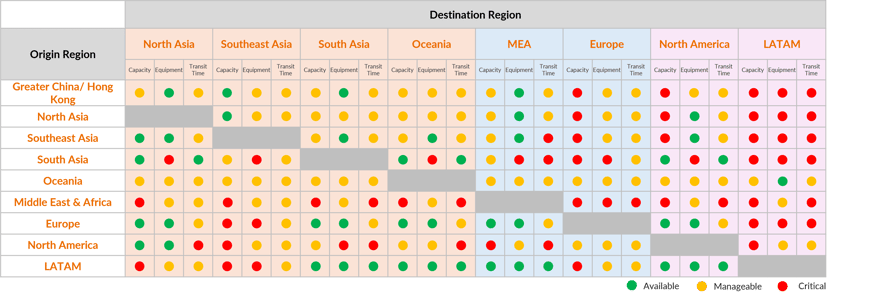
The ocean freight market delivered the most significant single-week rate increases of 2026 in early June, as carrier GRIs and peak season surcharges took simultaneous effect across all major lanes. Rates plateaued in mid-June rather than softening, and July GRIs were already in market before June had closed. The direction entering H2 2026 is higher, not lower.
### June brought the sharpest weekly increases since the 2025 tariff surge
On the week of 2 June, multiple carrier GRIs and PSS announcements took simultaneous effect. The Freightos Baltic Index recorded: Asia to US West Coast (FBX01) up 51% in a single week. Asia to US East Coast (FBX03) up approximately 25%. In the following week, Asia to North Europe (FBX11) rose 37%, surpassing its own prior peak season high from 2025. Asia to Mediterranean (FBX13) rose 24%.
Rates did not plateau: they continued climbing through June. By 30 June, the Freightos Baltic Index recorded Asia to US West Coast (FBX01) up 120% since mid-May and above the 2025 peak season high. Asia to US East Coast (FBX03) closed June up 85% in six weeks, above last year's frontloading-driven summer high. Asia to North Europe (FBX11) up 70% since mid-May and Asia to Mediterranean (FBX13) up 85% in the same period. Port congestion at major hubs across South Asia, the Far East, and Europe reduced effective capacity and reinforced upward price pressure. Vessels remained fully booked through June end, with containers rolling on some services. China to Australia East Coast rates also closed June materially higher, with schedule volatility on North Asia-to-AU/NZ services notably above pre-conflict conditions.
### BAF reset: contracted shippers face an 80% fuel surcharge increase
The quarterly Bunker Adjustment Factor resets in July against average bunker prices over Q2 2026, a quarter in which fuel ran well above pre-war levels at Singapore for extended periods. The estimated increase for contracted shippers is 80% on their current BAF charges. This is locked in regardless of oil price movements. The MOU-related easing feeds into the October BAF calculation, not July's.
If your freight cost reporting separates BAF from base freight, update your July budget model now. If it conflates them, the BAF increase will appear as a base rate change and distort budget-to-actual analysis.
**GRIs already announced: CMA CGM leading the Peak Season Surcharge**
CMA CGM announced a Peak Season Surcharge on all transpacific containers effective 10 July. Hapag-Lloyd announced a Peak Season Surcharge for Australia-bound cargo from the Far East, Middle East, Indian Subcontinent, and Red Sea destinations on sailings commencing 15 July. Multiple Asia-Europe carriers announced additional increases from 1 July. The Q3 rate floor is being set materially above Q2. One in three containers moved globally in May was empty, absorbing approximately 30% of TEU-miles and creating equipment availability risk at some origin ports.
**What this means entering July**
- Confirm Q3 carrier allocation before the booking window for August arrivals closes. Containers are already being rolled to subsequent sailings on some lanes.
- Update landed-cost models before July invoices arrive. Separate BAF from base freight in cost reporting to accurately track the 80% BAF increase.
- For Australian domestic legs, factor in the fuel excise increase effective 1 July when modelling port-to-warehouse and last-mile transport costs.
- Speak with your KLN Oceania account manager to review available carrier and service options before space tightens further.
[](https://info.oceania.kln.com/hs/cta/wi/redirect?encryptedPayload=AVxigLKSNHKojAgunHAiXY7QgXLN3CmT9MyfbFyToTM1KEIKz%2Bkans1X0ysJcIaj2bMCDvE3H8orcoh3L2gM3sjX%2FH2lL7v3n%2B9yLpsGfY9AQBRFSHrE2GvTXjT5dr7yH%2F%2F3NyxUcy%2FlW0rXI9GCnnlwicUOaZsonoFi9AtukQv8ZvaUH%2BOqtXCA9%2BtB%2F6Zpih01pxzawobde2xx68mp&webInteractiveContentId=148519118772&portalId=40234550)
### Ocean Freight Snapshot (July 2026)
## Air Freight Updates

### Rates Easing From Peak but Structural Demand Is Reshaping the Lane
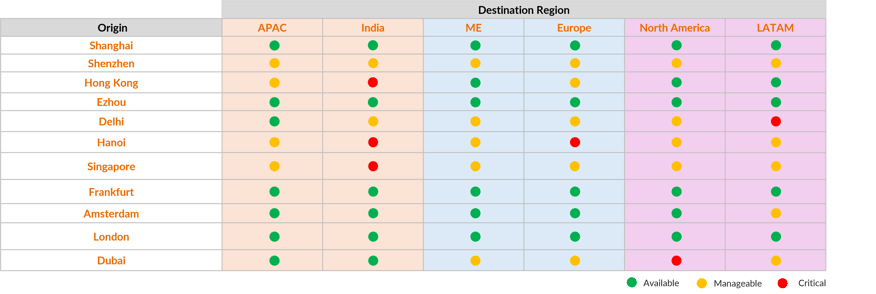
Air freight rates closed June approximately 30% above pre-war levels, having eased from the 50% premium seen in April and May. Gulf carriers restored approximately 70% of pre-war capacity through the month, and jet fuel fell around 35% from its April high. By mid-June, China to North America rates were 17% above year-ago levels and China to North Europe 21% above year-ago levels. Several carriers began reducing Emergency Fuel Surcharges as costs eased.
Capacity from Asia into AU/NZ remained constrained through June. Securing preferred uplift dates was more challenging on some lanes, consistent with the broader picture of Gulf carriers operating at 70% of pre-war capacity while non-Gulf carriers continued avoiding Middle East airspace.
### AI Hardware: The Structural Demand Shift That Outlasts the Conflict
AI-related hardware imports into the US grew 70% year-on-year in Q1 2026, a structural demand shift that has maintained elevated rates on Asia-US lanes independent of the conflict premium. For AU/NZ businesses shipping time-sensitive goods from Asia by air, this is a meaningful factor: AI hardware is competing for the same belly and freighter capacity that serves Oceania routes through major Asian hub airports.
From 1 July, the EU eliminated its de minimis customs threshold, matching the US decision earlier in the year. Low-value e-commerce parcels now face full customs treatment on entry into the EU. The indirect effect for Oceania businesses is a potential shift in available belly capacity on Asian hub routes as e-commerce platforms adjust their volumes.
**What this means entering July**
- The easing of fuel-related surcharges represents a genuine cost improvement compared to April-May highs. Confirm current FSC schedules before locking in air freight quotes, as rates are now moving in both directions depending on trade lane and carrier.
- For time-sensitive product launches, promotional inventory, or exception recovery cargo, book capacity ahead. Preferred uplift dates from Asia into AU/NZ are harder to secure than they were three months ago.
- The AI hardware structural demand shift is a medium-term factor, not a cyclical one. Plan for a firmer Asia-Pacific air freight market through H2 2026 independent of how the conflict resolves.
### Air Freight Snapshot (July 2026)

## Customs, Inland Transport, Terminal and Regulation Updates
##### 
### AU: Fuel Excise Reduction Expired 30 June: Higher Road Freight Costs Now in Effect
The Australian government's temporary fuel excise reduction expired at midnight on 30 June 2026. Full excise rates returned from 1 July, increasing fuel costs for both light and heavy vehicles across Australia. Domestic freight rates are now reflecting the higher cost base. Businesses reviewing July domestic freight invoices should confirm whether carriers have applied rate adjustments and update cost-per-kilometre models accordingly. Operators on fixed-price arrangements may receive renegotiation requests from carriers this month.
### NZ: Port of Auckland | VBS Access Fees Rose 28% from 1 July 2026
The Port of Auckland's [Vehicle Booking System access fees increased effective 1 July 2026](https://info.oceania.kln.com/knowledgehub/nz-vbs-poal-2026). Peak bookings at Fergusson Container Terminal rose 28%, driven by the access fee component. The VBS booking component and off-peak pricing are unchanged; Multi-Cargo peak bookings also increased. Transport operators using Fergusson Container Terminal should update landed-cost models now to reflect the new fee structure. Operators with scheduling flexibility can partially offset the increase by shifting pickups to off-peak windows.
### NZ: Port of Auckland | Fuel Adjustment Factor Reductions: 12 June and 10 July 2026
Effective 12 June 2026, POAL moved to the +121%–+140% fuel price band, reducing the full import/export container FAF. A further reduction takes effect 10 July 2026, bringing the FAF down again for a cumulative reduction from the pre-ceasefire level. These reductions partially offset the VBS access fee increase from 1 July. The FAF is calculated on a six-week rolling average; the band applicable at vessel arrival date applies. A further reduction is possible in August if oil prices continue their current trajectory, though the contested Hormuz status introduces uncertainty into that projection.
**AU: DAFF Biosecurity and Imported Food Regulatory Fees Rose 3.8% from 1 July 2026**
The Department of Agriculture, Fisheries and Forestry confirmed a 3.8% indexation increase across most legislated biosecurity and imported food regulatory charges from 1 July 2026. Fees affected include full import declaration charges, vessel charges, and approved arrangement charges. Alongside the indexation, legislative amendments introduced higher-than-standard increases for companion animal imports, new cost recovery charges for live garden snails at DAFF's Post Entry Quarantine facility, and revised provisions for avian imports. New diagnostic charges for international vessel-related activities commenced 1 July; a broader revision of cargo diagnostic charges introducing cost recovery for services previously not charged or only partially recovered is expected from 1 November 2026. Importers of plant products, live animals, and goods subject to laboratory testing carry the greatest cumulative exposure.
*Contact our KLN Oceania team for freight planning support, cargo insurance review, or customs brokerage advice specific to your programmes.*
[](https://info.oceania.kln.com/hs/cta/wi/redirect?encryptedPayload=AVxigLKSNHKojAgunHAiXY7QgXLN3CmT9MyfbFyToTM1KEIKz%2Bkans1X0ysJcIaj2bMCDvE3H8orcoh3L2gM3sjX%2FH2lL7v3n%2B9yLpsGfY9AQBRFSHrE2GvTXjT5dr7yH%2F%2F3NyxUcy%2FlW0rXI9GCnnlwicUOaZsonoFi9AtukQv8ZvaUH%2BOqtXCA9%2BtB%2F6Zpih01pxzawobde2xx68mp&webInteractiveContentId=148519118772&portalId=40234550)
### Why Partner with KLN
Selecting KLN Oceania as your trusted partner isn't just a choice—it's a strategic move towards ensuring your success. Our commitment to excellence is not just a promise; it's a guarantee. With a global network that's both vast and meticulously managed, we stand head and shoulders above the competition. This means you benefit directly from unparalleled service quality, ensuring your supply chain needs are met with precision, efficiency, and minimal hassle.
Are you ready to elevate your logistics game and experience seamless support tailored to your unique needs? Let's discuss how we can bring unparalleled value to your business.
[](https://info.oceania.kln.com/hs/cta/wi/redirect?encryptedPayload=AVxigLKSNHKojAgunHAiXY7QgXLN3CmT9MyfbFyToTM1KEIKz%2Bkans1X0ysJcIaj2bMCDvE3H8orcoh3L2gM3sjX%2FH2lL7v3n%2B9yLpsGfY9AQBRFSHrE2GvTXjT5dr7yH%2F%2F3NyxUcy%2FlW0rXI9GCnnlwicUOaZsonoFi9AtukQv8ZvaUH%2BOqtXCA9%2BtB%2F6Zpih01pxzawobde2xx68mp&webInteractiveContentId=148519118772&portalId=40234550)

## Related articles
[View All](https://info.oceania.kln.com/konnect)
[Konnect](https://info.oceania.kln.com/konnect/tag/konnect) [KONNECT - SEPTEMBER 2026](https://info.oceania.kln.com/konnect/konnect-september-2026)
04 Sep 2026
[Konnect](https://info.oceania.kln.com/konnect/tag/konnect) [KONNECT - AUGUST 2026](https://info.oceania.kln.com/konnect/konnect-august-2026)
31 Jul 2026
[Konnect](https://info.oceania.kln.com/konnect/tag/konnect) [KONNECT - JUNE 2026](https://info.oceania.kln.com/konnect/konnect-june-2026)
05 Jun 2026
[Konnect](https://info.oceania.kln.com/konnect/tag/konnect) [KONNECT - MAY 2026](https://info.oceania.kln.com/konnect/konnect-may-2026)
05 May 2026
[Konnect](https://info.oceania.kln.com/konnect/tag/konnect) [KONNECT - APRIL 2026](https://info.oceania.kln.com/konnect/konnect-april-2026)
30 Mar 2026
[Konnect](https://info.oceania.kln.com/konnect/tag/konnect) [KONNECT - MARCH 2026](https://info.oceania.kln.com/konnect/konnect-march-2026)
27 Feb 2026
[Konnect](https://info.oceania.kln.com/konnect/tag/konnect) [KONNECT - DECEMBER 2025](https://info.oceania.kln.com/konnect/konnect-december-2025)
05 Dec 2025
[Konnect](https://info.oceania.kln.com/konnect/tag/konnect) [KONNECT - NOVEMBER 2025](https://info.oceania.kln.com/konnect/konnect-november-2025)
06 Nov 2025
### Notices
### Company
### Locations
Connect with KLN Oceania
[](https://www.linkedin.com/company/29366171/)
[](https://www.kln.com/)
© 2026 KLN FREIGHT (OCEANIA) LIMITED. ALL RIGHTS RESERVED.
- [Trading terms](https://oceania.kln.com/legal/trading-terms/)
- [Terms & conditions of use](https://oceania.kln.com/legal/terms-conditions-of-use/)
- [Privacy policy](https://oceania.kln.com/legal/privacy-policy/)
- [Disclaimer](https://oceania.kln.com/legal/disclaimer/)
```json
{
"@context" : "https://schema.org",
"@type" : "BlogPosting",
"author" : {
"@type" : "Person",
"name" : "KLN Oceania",
"url" : "https://info.oceania.kln.com/konnect/author/kln-oceania"
},
"dateModified" : "2026-07-08T05:57:47.402Z",
"datePublished" : "2026-07-08T05:41:02.000Z",
"headline" : "KONNECT - JULY 2026",
"image" : [ "https://info.oceania.kln.com/hubfs/banner%20konnect%202026%202.png" ],
"mainEntityOfPage" : {
"@id" : "https://info.oceania.kln.com/konnect/konnect-july-2026",
"@type" : "WebPage"
},
"publisher" : {
"@type" : "Organization",
"logo" : {
"@type" : "ImageObject",
"url" : "https://info.oceania.kln.com/hubfs/KLN%20Logo_colour.jpg"
},
"name" : "KLN FREIGHT (OCEANIA) PTY. LTD."
}
}
```